
Many places experience high temperatures and direct sunlight every July, such as North America and Southern Europe. However, outdoor advertising screens and rental stage screens are prone to automatic black screens, dead lights, sudden drops in brightness, power outages, and other malfunctions. High temperature combined with solar radiation for dual heating. LED chips, driver ICs, and switch power supplies generate heat in a concentrated manner, both inside and outside the cabinet. Ningshine will address how to ensure the normal operation of summer high-temperature LED displays from various aspects.
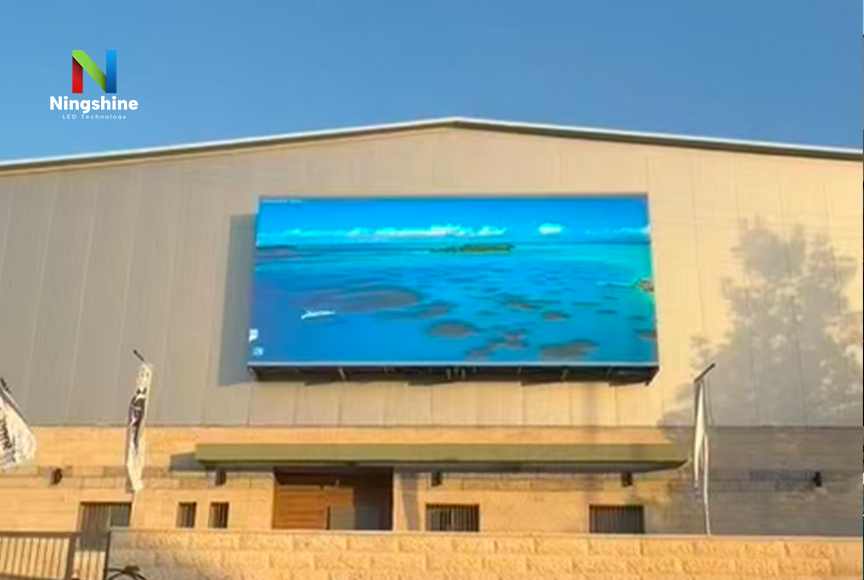
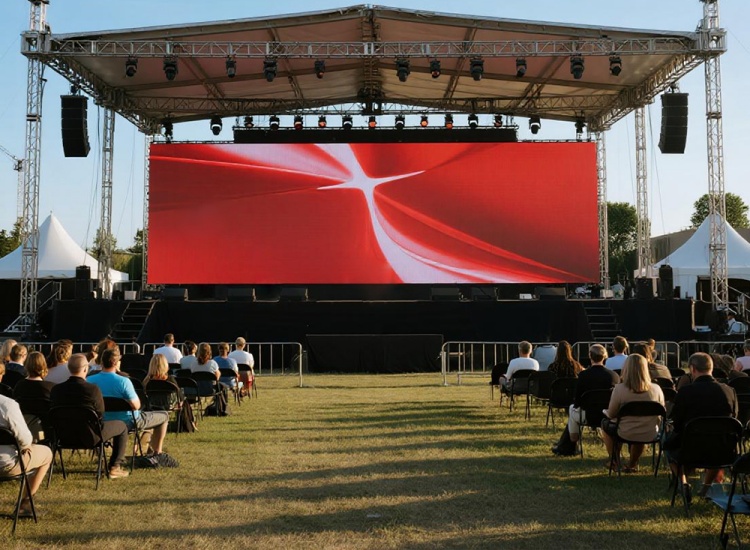
I. Pain points of high-temperature LED display outdoor
- In summer in Europe and America, the surface exposure temperature at noon can reach 40-55 ℃. And the power consumption of the outdoor high brightness screen itself is 700-1000W/㎡. The heat accumulation in the closed box makes it prone to the following faults.
- Overheating protection black screen. Firstly, If the internal temperature of the LED display exceeds 60 ℃, the power supply and driver chip will automatically power off. Then the screen will be disconnected during festivals and events.
- Light decay and color drift. First, red LEDs resist high temperatures the poorest. As a result, long high heat triggers color cast and partial darkening. Consequently, advertising display effects drop significantly. For every 10 ℃ increase in temperature, the lifespan of the lamp beads is directly halved;
- Accelerated damage to components. Thermal expansion and contraction lead to solder joint detachment and aging of electrolytic capacitors, so resulting in extremely high on-site repair costs for European and American after-sales service.
II. Heat dissipation and temperature control solution
- High thermal conductivity all aluminum box with fin heat dissipation structure.
- Low thermal resistance industrial grade lamp beads+common cathode energy-saving technology.
- High temperature resistant PCBs and components.
- Bidirectional convection duct (IP65 waterproof and rainproof).
- Active cooling system: graded forced cooling, equipped with air conditioning.
III. Daily maintenance of outdoor screens
- Clean the ventilation louvers and fan dust of the box every 3 months to avoid air duct blockage and accumulation of heat and black screen.
- When exposed to direct sunlight at noon, it is recommended to activate the intelligent temperature limiting mode. And avoid running at full brightness for a long time.
- Regularly remotely check the backend temperature data and promptly troubleshoot modules and fans if local high temperatures are detected.
- Install a sunshade and rain proof eave on the top of the outdoor screen. To reduce direct sunlight on the cabinet and assist in lowering the basic temperature.
IV. Conclusion-LED display outdoor
Whether it’s normal operation of daily LED displays or high temperature operation in summer. Ningshine has a complete heat dissipation and temperature control solution. In addition, both Ningshine outdoor rental and fixed screens have IP65 or higher protection, fully suitable for various outdoor environments.