
Currently, both rental and fixed-installation LED displays are commonly seen in everyday life. Small-pitch LED displays are also appearing in various indoor fixed-installation applications. Thanks to their unique technology and advantages, small-pitch LED displays have secured an important position in the display technology industry.
I. What is a small pitch LED display?
Small-pitch LED displays refer to LED screens with a pixel pitch of P2.5 (2.5mm) or less. Examples include standard models such as P2.5, P1.86, P1.53, and P1.25. There are also ultra-fine pitch COB screens, such as the commonly used P1.25 and P1.56. COB screens can achieve a minimum pixel pitch of 0.625mm, offering ultra-high resolution and very high-definition display effects.
- Key parameters
| parameter | range | Advantages |
| Pixel Pitch | P0.625-P2.5 | Minimum of 0.625mm can eliminate the grainy appearance at close range |
| Resolution | 2K,4K, 8K | Supports 4K/8K high-definition display, providing clear and detailed images. |
| Brightness | 600-800nits | Supports HDR dynamic adjustment, adapting to different ambient light conditions. |
| Grayscale | 14-16Bit | Smooth color transitions and rich detail. |
| Refresh Rate | ≥3840Hz | No flickering, no scan lines. |
| lifespan | ≥100,000 hours | It has twice the lifespan of LCDs (50,000 hours), offering a longer service life. |
II. Core Advantages
- Small pixel pitch. The most fundamental characteristic of small pixel pitch LED screens is their small pixel pitch, which allows for more LED pixels in the same screen area, resulting in higher resolution.
- High pixel density. The number of pixels per unit area has increased significantly, such as P1.25 with 640,000 pixels per square meter and P2.5 with 160,000 pixels per square meter.
- High Contrast. High-quality packaging technology makes the LEDs appear darker when not illuminated, resulting in a higher contrast ratio (up to 10000:1 or more). Therefore, LED displays show purer blacks and have a greater sense of depth in the image.
- Wide viewing angle: Both horizontal and vertical viewing angles exceed 160°, ensuring no significant degradation in color and brightness regardless of the viewing angle. Therefore, viewers can see a perfect image from all positions.
III. Advantages of Using Small Pitch LED Display
- Modular design. Individual modules can be installed, removed, and replaced independently without affecting the display during maintenance. The front-maintenance design makes maintenance convenient and quick.
- Lightweight and slim design. It features a lightweight die-cast aluminum design. The Ningshineled ultra-thin SF series has a thickness of only 20mm. Furthermore, it offers flexible installation options (supports wall mounting, ceiling mounting, and floor standing).
- Seamless splicing. The gap between modules is less than 1mm, and can even be less than 0.1mm, resulting in an almost completely seamless visual appearance.
- Flexible design. Supports various structures such as flat, curved, cylindrical, S-shaped, and right-angled designs. It can be flexibly selected according to the specific application scenario.
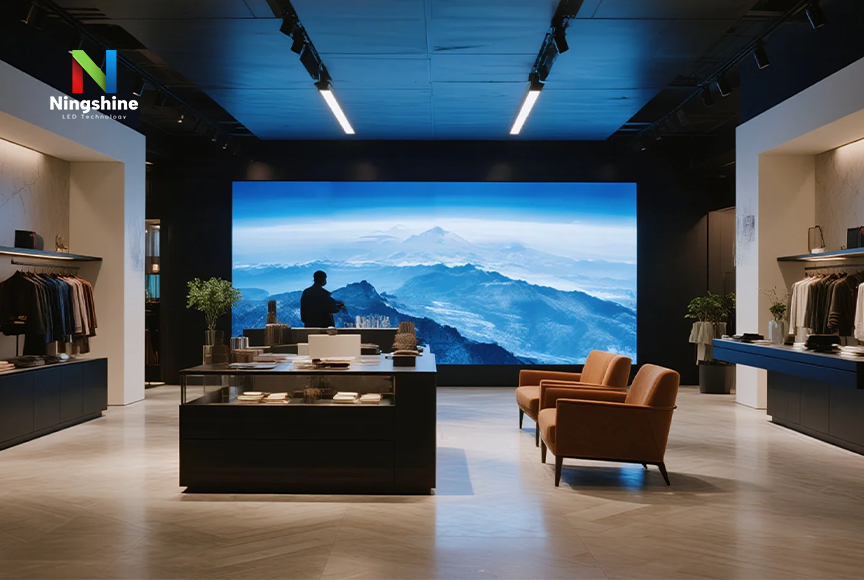
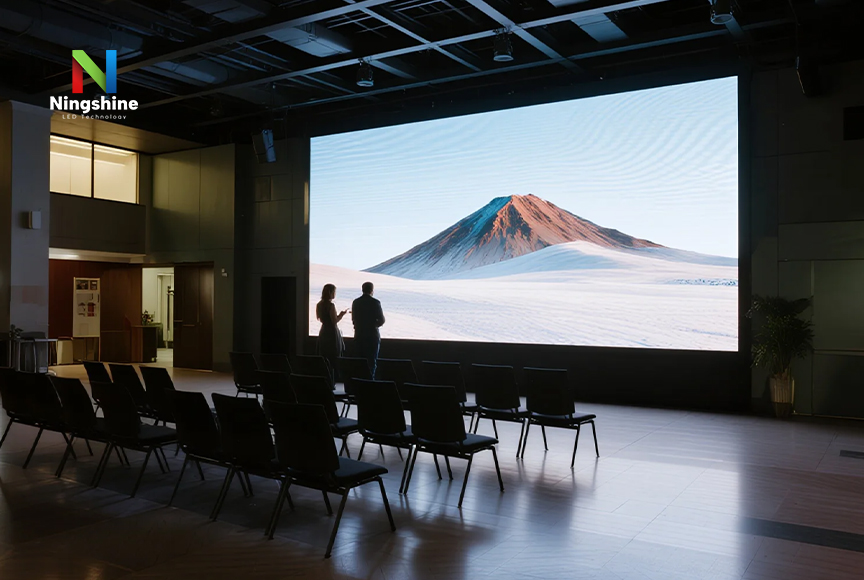
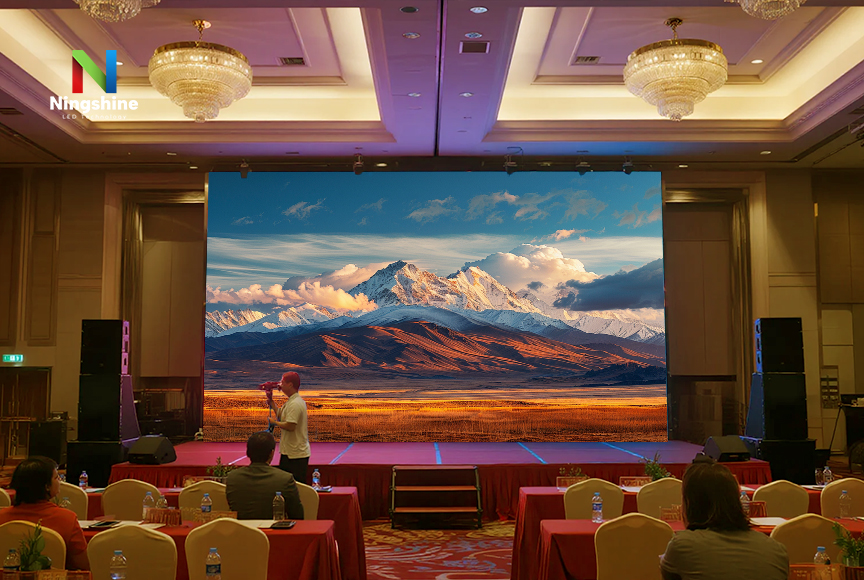
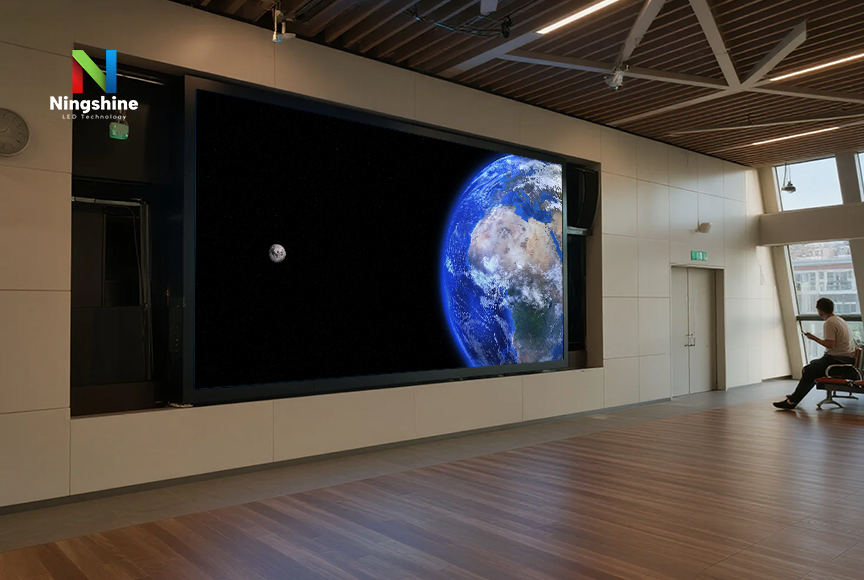
- Application Scenarios. Widely used in various indoor settings such as corporate lobbies, exhibition halls, high-end retails, conference rooms, and auditoriums. Small-pitch LED displays are becoming increasingly popular due to their various advantages and high-definition display capabilities.
IV. Summary
In summary, small-pitch LED displays, with their advantages of high definition, seamless splicing, and modular design, have become the mainstream choice for various indoor applications. They are particularly suitable for scenarios requiring close-range viewing, high image quality, and long operating hours. With technological advancements and the maturation of Mini/Micro LED technology, Mini/Micro LED displays are gradually gaining prominence in various high-end applications.