
Indoor LED video wall displays are becoming an important visual solution for retail stores, shopping malls, showrooms, and flagship brand stores. They help businesses present promotional campaigns, product videos, brand stories, and seasonal advertisements on large, seamless digital screens.
Compared with traditional printed signage, an indoor LED display allows retailers to update content more flexibly and create dynamic visual experiences. However, choosing the best LED screen requires more than comparing prices. Pixel pitch, brightness, viewing distance, screen size, installation design, and long-term maintenance all affect the final result.
Therefore, we explain how to choose the right indoor LED display for retail stores and shopping malls.
I. Why Do Retail Stores and Shopping Malls Need Indoor LED Displays?
Retail environments rely on visual communication to present products, promote campaigns, and strengthen brand identity. An indoor LED video wall can support these goals through vivid colors, seamless large-format images, and flexible content management.
Common applications include:
- Retail storefronts: Showcase new arrivals, seasonal campaigns, and brand promotions.
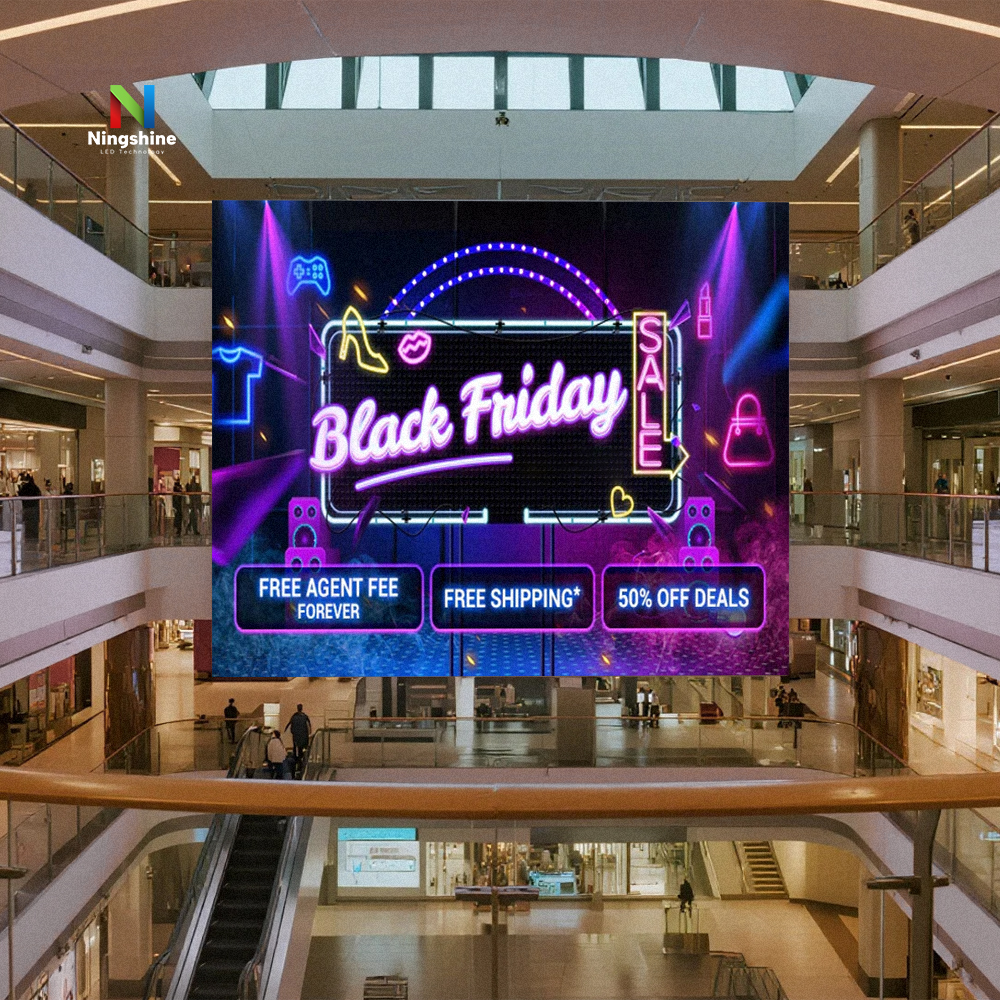
- Shopping mall atriums: Create large visual installations and display advertising campaigns.
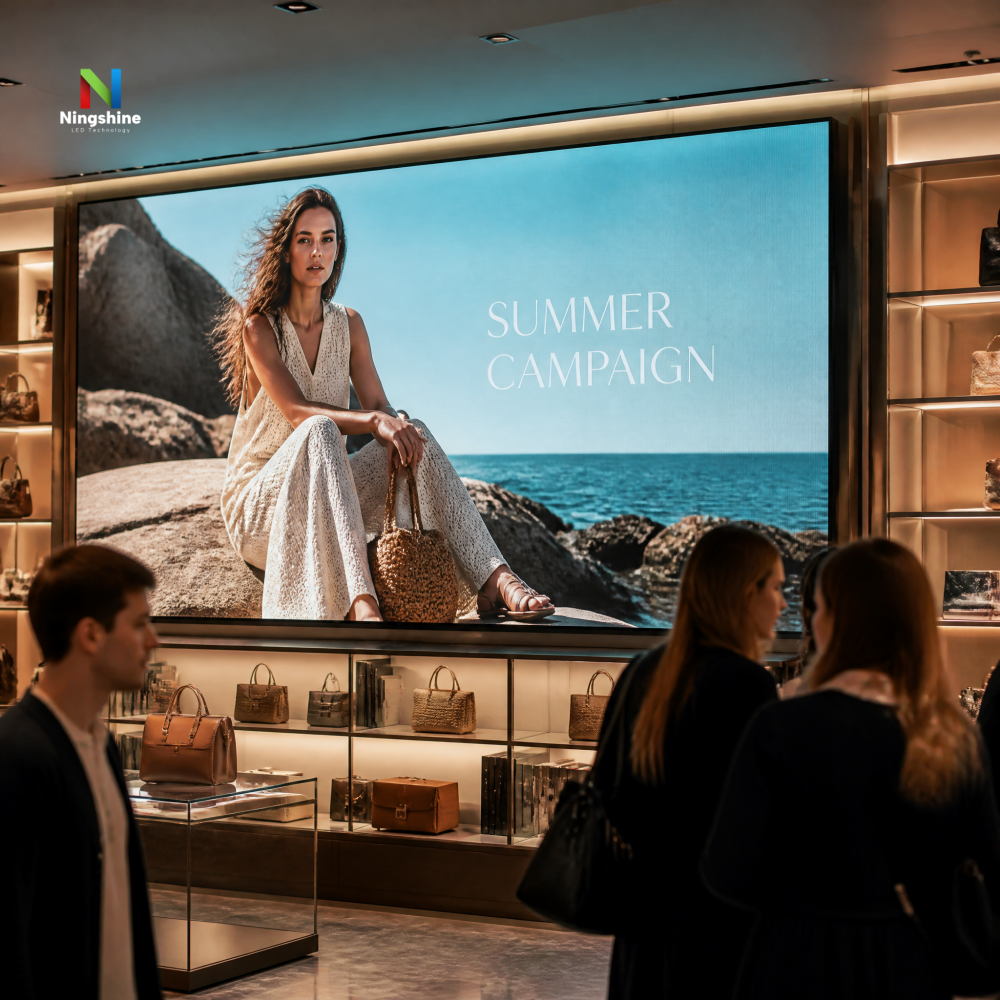
- Luxury flagship stores: Present premium product videos and brand storytelling.
- Showrooms: Demonstrate products through high-resolution images and videos.
- Supermarkets and department stores: Display promotions, product information, and digital signage.
- Shopping mall corridors: Deliver advertising content and promotional messages to passing visitors.
For retailers managing multiple stores, centralized content management may also help coordinate campaigns across different locations.
II. What Is the Best Pixel Pitch for Retail LED Displays?
Pixel pitch is the distance between the centers of two adjacent LED pixels, measured in millimeters. A smaller pixel pitch generally provides higher pixel density and sharper details at close viewing distances.
The right pixel pitch depends on where customers stand and what content the screen needs to display.
| Pixel pitch | Typical applications |
| P1.25–P1.56 | Premium retail displays and close-viewing applications |
| P1.86–P2.0 | Boutique stores, conference room, product showcases, and brand walls |
| P2.5 | General theater, retail stores, showrooms, and shopping mall displays |
| P2.97–P3.91 | Larger indoor spaces and displays viewed from farther away |
The final selection should account for the closest regular viewing distance, screen dimensions, text size, and project budget.
For example, a luxury cosmetics store displaying detailed product videos may benefit from a fine-pitch LED screen. A large shopping mall atrium viewed from several meters away may use a different configuration.
SMD vs. COB: Which Indoor LED Technology Is Better for Retail?
SMD LED displays are widely used for indoor commercial screens and offer a practical balance of image quality, configuration flexibility, and project cost.
COB, or Chip-on-Board, technology places LED chips directly onto the substrate and protects them with a surface layer. Depending on the design, this can support fine-pitch displays with a more integrated, protected front surface.
Installation Method-Indoor LED Video Wall
The ideal screen size depends on the available wall space, viewing distance, content layout, and surrounding store design.
Common installation options include:
- Wall-mounted LED video walls: Suitable for retail brand walls and promotional displays.
- Recessed installations: Integrate the screen into a finished wall or custom retail fixture.
- Freestanding LED displays: Useful for selected promotional areas and open retail spaces.
- Large-format mall LED walls: Designed for atriums, feature walls, and prominent advertising locations.
For permanent installations, front maintenance can be useful when rear access is limited. Rear maintenance may be practical where sufficient technical space is available.
Conclusio-Indoor LED Video Wall
Finally, choosing a suitable indoor LED video wall not only needs to consider the above points, but also needs to consider brightness, refresh rate, protection, etc. It also depends on the viewing distance, brightness, screen size, content requirements, and project budget of the project.